The Glitch Gods Win Again: How TikTok's Chaos Engine Is Rewriting the Rules of Artistic Worth
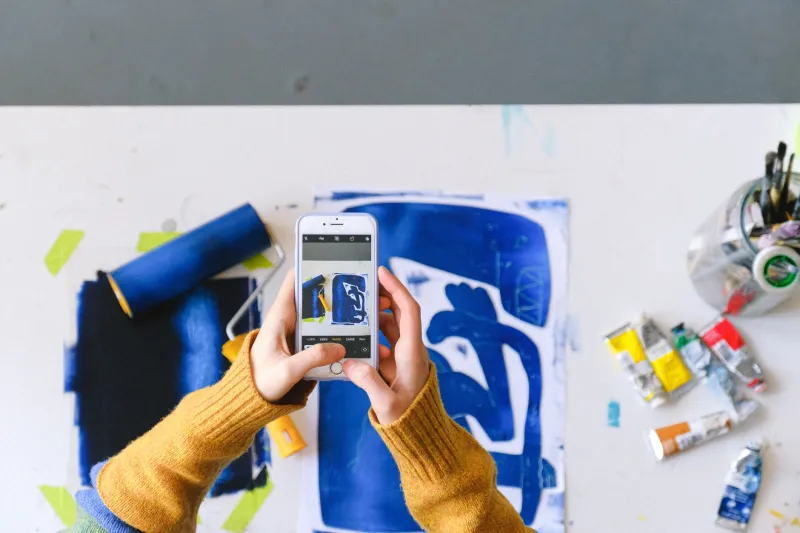
Somebody's shaky, overexposed watercolor video — filmed on a cracked iPhone screen with a ceiling fan humming in the background — just hit four million views. Meanwhile, a meticulously lit, professionally edited showcase of a classically trained painter's decade-long opus is sitting at 312 views and a single comment that just says "nice."
Welcome to the new art world. Population: everyone. Curators: none.
TikTok's recommendation engine doesn't care about your BFA. It doesn't care that you spent three years perfecting negative space or that your color theory professor wept when she saw your thesis piece. It runs on something closer to beautiful, infuriating randomness — and it is absolutely dismantling the gatekeeping infrastructure that the art establishment spent centuries building.
The Algorithm Doesn't Know What 'Good' Means (And That's the Point)
Dr. Priya Mehta, a computational media researcher at UC San Diego who studies recommendation systems and cultural production, puts it bluntly: "These platforms aren't optimizing for quality in any traditional aesthetic sense. They're optimizing for engagement signals — watch time, replays, comments, shares. Rawness triggers those signals. Imperfection triggers those signals. A wobbling camera and an audible gasp from the creator? That's cocaine for the algorithm."
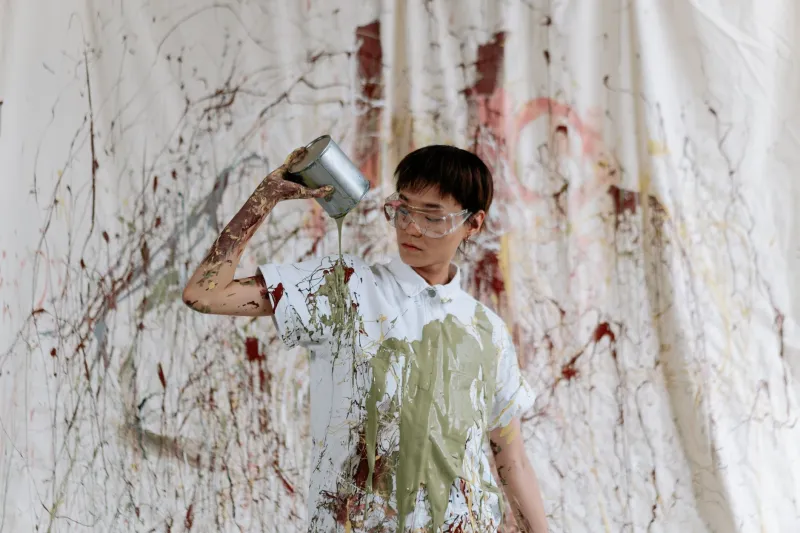
What she's describing is a feedback loop that actively rewards the kind of work that traditional art institutions have historically dismissed. The nervous energy in a first-time sculptor's hands. The visible frustration when a pour painting goes sideways. The moment a street muralist makes a mistake and just... rolls with it. These aren't flaws the algorithm penalizes. They're the whole show.
For decades, the path to artistic legitimacy ran through a very specific set of tollbooths: gallery representation, museum acquisitions, critical reviews in publications that most Americans have never heard of, and the slow, grinding approval of an insular professional class. TikTok didn't negotiate with that system. It just went around it entirely.
Creators Who Broke Through the Noise
Ask Marcus Webb, a self-taught ceramicist from Memphis who started posting videos of his work in 2022 with zero formal training and a kiln he bought secondhand off Facebook Marketplace. His aesthetic is deliberately rough — fingerprints visible in the clay, glazes that bleed and pool in ways a ceramics professor might circle in red pen. His follower count crossed 800,000 last spring.
"I used to apologize for the imperfections in my pieces," Marcus says. "Then I noticed those were the exact moments people would screenshot or rewatch. The drip. The crack. The glaze that did something I didn't plan. People lose their minds over that stuff. Now I lean into it hard."
He's not alone. Across disciplines — illustration, textile art, experimental photography, even classical music played in deliberately chaotic contexts — creators are discovering that the algorithm has an appetite for the unexpected that no human curator has ever matched. It's not that slick, polished work never performs. It does. But it no longer has a monopoly on visibility, and that is a seismic shift.
The Institutions Are Sweating
Not everyone is celebrating. Inside certain corners of the fine art world, there's a low-grade panic setting in.
Eleanor Fitch, a gallery director in Chicago who asked us not to name her institution, describes watching the market conversation change in real time. "We're fielding calls from collectors who discovered artists through TikTok before we did. That used to be unthinkable. The gallery was the discovery mechanism. Now we're sometimes the last to know."
She's conflicted about what this means. On one hand, she acknowledges that the gatekeeping system she operates within has historically been exclusionary in ways that are hard to defend — economically, racially, geographically. On the other, she worries that virality as a metric of artistic value is its own kind of distortion. "Going viral and being significant aren't the same thing. I'm not sure everyone making that content understands the difference yet."
It's a fair tension. But critics of the establishment would argue that "significance" was always a rigged game — defined by people who looked alike, came from similar backgrounds, and had deeply vested interests in controlling who got to be called an artist.
Chaos as Creative Liberation
Here's what's genuinely wild about this moment: the algorithmic randomness that drives TikTok's distribution isn't a bug that creators are working around. For a growing number of makers, it's become a creative philosophy in itself.
Tamika Reeves, a textile artist and educator based in Atlanta, has started building the unpredictability of the algorithm directly into her practice. She posts work at random hours, experiments with formats she's never tried, deliberately introduces elements of chance into her process — and then documents all of it. "The algorithm taught me to stop being precious," she says. "You can't control what lands. So you might as well make the wildest version of the thing and throw it out there."
What she's describing sounds a lot like what the Dadaists were doing a century ago, or what Fluxus artists were experimenting with in the 1960s — using randomness and chance as legitimate artistic tools. The difference is that TikTok has democratized access to that tradition in a way that no art movement ever managed to. You don't need to know who George Maciunas was to stumble into his methodology via a recommendation feed.
So What Counts as 'Good' Now?
This is the question that nobody has a clean answer to, and honestly, that might be the most exciting part.
Dr. Mehta suggests we're in the middle of a genuine paradigm shift in how creative value gets assigned. "Historically, quality was defined by institutions over long time horizons. What we're seeing now is something closer to real-time collective judgment — messy, contradictory, and highly distributed. It's not necessarily better or worse. It's just fundamentally different."
Marcus Webb, for his part, isn't waiting for the art world to catch up. He just opened an online shop. Sold out in forty minutes.
There's a lesson in there somewhere — about who gets to decide what art is worth, about the creative energy that gets unlocked when the gatekeepers lose the keys, and about what happens when an algorithm built to maximize watch time accidentally becomes the most democratic art critic in American history.
The gallery walls are still standing. But the crowd is outside, making something weirder and louder than anything hanging on them. And the algorithm? It's already sharing the link.