Failing Forward: How Art Schools Are Turning Creative Wreckage Into a Core Subject
For decades, the art school pipeline worked like this: you showed up, you learned the rules, you mastered technique, and then — maybe, if your professors deemed you worthy — you got to break stuff. Picasso's old chestnut about learning the rules like a pro so you can break them like an artist was basically carved above every studio door in America. But a growing number of institutions are flipping that script entirely, and the results are loud, messy, and honestly kind of thrilling.
Welcome to what educators are quietly calling the chaos curriculum — a pedagogical shift that treats intentional failure not as a detour on the road to mastery, but as the road itself.
The Old Model Was Killing Creative Risk
Here's the thing nobody in traditional arts education wanted to say out loud: training students to chase perfection first was producing technically competent graduates who were terrified to take a swing at anything genuinely new. The pressure to demonstrate mastery before experimentation created a generation of makers who could execute beautifully but struggled to invent.
"We were graduating people who could replicate," says one foundation-year instructor at a prominent East Coast design school who asked to remain anonymous because, as she put it, "academia is still academia." "They could look at a Basquiat and technically analyze it all day. But ask them to make something that had never existed before and the room went silent."
The anxiety wasn't irrational. When your tuition bill reads like a mortgage, you protect your GPA. You play it safe. You make the thing that will get the nod in critique, not the thing that might detonate in your face.
But detonation, it turns out, is exactly the point.
Constraint as a Chaos Engine
Some of the most interesting shifts happening right now aren't about removing structure — they're about weaponizing it. Constraint-based creation, where students are handed deliberately absurd or limiting parameters, has become one of the more subversive tools in the progressive art educator's kit.
Think: make a portrait using only materials you find in a dumpster within a two-block radius. Build a typeface using only broken objects. Design a brand identity for a company that actively hates branding. The constraints aren't meant to help — they're meant to break your default settings.
"When you remove the option of doing it 'right,' students stop performing and start making," explains a graphic design professor at a small liberal arts college in the Pacific Northwest who's been running what he calls "failure sprints" for the past three years. "You give someone 45 minutes, a ridiculous restriction, and zero chance of producing something polished, and suddenly they're the most creative they've ever been in their life."
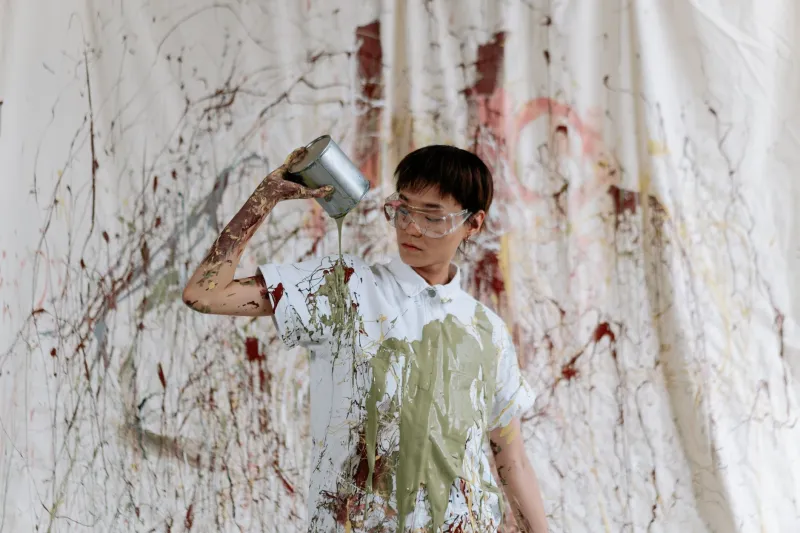
The results from these exercises aren't always pretty. That's the whole point. A watercolor that bleeds into itself becomes a study in controlled accident. A typographic assignment gone sideways produces something that looks closer to outsider art than a textbook exercise — and sometimes that outsider art is the most compelling thing in the room.
Killing the Grade to Save the Work
Another tectonic shift: a handful of programs are experimenting with grade-free or pass/fail critique structures for foundational courses, specifically to detach the emotional stakes from the experimental process.
This is where it gets genuinely radical by American higher education standards. Grades are the currency of academic survival, and removing them — even temporarily, even in a single studio class — sends a signal that the institution actually means it when it says failure is welcome here.
At one MFA program in Chicago, first-semester students participate in what faculty call "the wreck," a six-week module where every project is evaluated solely on the evidence of risk-taking rather than outcome quality. Did you try something you'd never tried before? Did you abandon a safe choice in favor of a dangerous one? Did you make something that could have gone badly wrong — and did you learn something when it did?
"The first week, students are furious," laughs one faculty member involved in the program. "They want rubrics. They want to know what 'good' looks like. And we keep telling them: that's not the question we're asking right now."
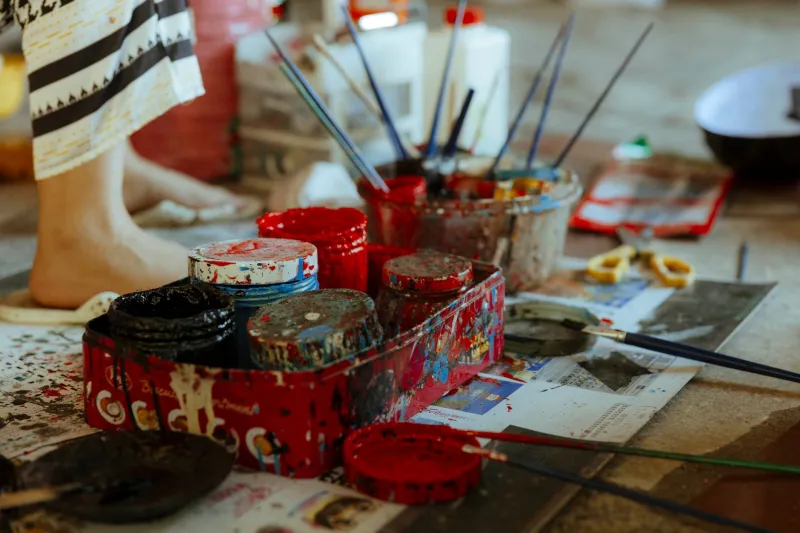
By week six, the studio looks like a beautiful disaster zone. And the work on the walls is, by almost every account, more alive than anything produced in the graded courses.
Students Who've Drunk the Kool-Aid
Talk to students who've been through these programs and you hear a consistent refrain: the shift is disorienting at first, then kind of liberating, then — once it clicks — genuinely transformative.
One recent graduate of a design program in Brooklyn described her experience with constraint-based chaos exercises as "the creative equivalent of being pushed out of a plane and told to figure out the parachute on the way down." Terrifying, she said. Also the most productive semester of her life.
"I stopped making things for the approval of whoever was in the room," she said. "I started making things because I was genuinely curious about what would happen. That sounds simple, but it changed everything about how I work."
Another student, currently finishing his BFA in Los Angeles, put it more bluntly: "I used to spend 80 percent of my energy managing how my work would be received. Now I spend that energy on the actual work. The math isn't complicated."
The Pushback Is Real (and Kind of Predictable)
Not everyone is on board. Traditionalists — and there are plenty of them still holding significant institutional power — argue that abandoning mastery-first pedagogy produces graduates who are enthusiastic but technically underprepared. The counterargument that technical skills can be taught in parallel with experimental risk-taking hasn't fully landed everywhere yet.
There's also a legitimate equity conversation buried in here. Students from under-resourced backgrounds often arrive at art school with less technical foundation than their peers, and a curriculum that deprioritizes skill-building can inadvertently disadvantage them. The most thoughtful programs are grappling with this directly, building in technical support structures that run alongside the chaos rather than replacing the fundamentals entirely.
Why This Matters Beyond the Classroom
The broader cultural argument for this shift is hard to ignore. We are living in an era of unprecedented creative noise — AI-generated imagery, algorithmic content, infinite scroll aesthetics that flatten everything into the same visual language. The makers who cut through that noise aren't the most technically perfect ones. They're the ones willing to do something genuinely strange.
Art schools that train students to embrace productive mess, to find the signal inside the failure, to treat a creative disaster as data rather than defeat — those schools are producing graduates built for the actual creative landscape they're entering.
The chaos curriculum isn't anti-craft. It's anti-timidity. And in a cultural moment that desperately needs people willing to make something that might not work, that distinction matters more than ever.
So here's to the art schools burning their own rubrics. Here's to the professors handing out failure like it's the assignment. And here's to every student who made something completely wrong and found out, in the wreckage, exactly who they are as a maker.
That's not a detour. That's the whole damn education.