Break It to Make It: The Makers Turning Busted Gear Into Their Biggest Creative Weapon
There's a moment every creator knows. The camera misfires. The audio file corrupts. The paintbrush splays out like a dried-up mop. Most people panic, curse, and reach for a replacement. But a growing community of makers across the US is doing something radically different — they're leaning in, doubling down, and asking the broken thing to teach them something.
Welcome to the world of intentional equipment sabotage, where the damage is the design.
The Beautiful Lie of Perfect Tools
We've been sold this idea that better gear equals better art. Sharper lenses. Cleaner sample packs. Stiffer bristles. The creative industry has spent decades convincing makers that polish is the point. But here's the thing: polish doesn't have a personality. Perfection doesn't bleed.
Ask any veteran photographer who's shot on expired 35mm film or a warped disposable camera, and they'll tell you the same thing — the imperfection is doing heavy lifting that a $3,000 mirrorless body simply cannot replicate. There's a warmth, a grain, a wrongness that hits different. It's not nostalgia. It's texture. And texture is what separates memorable work from forgettable content.
The makers getting real traction right now aren't the ones with the cleanest setups. They're the ones who figured out that a busted tool has opinions.
Scratching Back: The Film Photographers Going Full Destructive Mode
In cities like Portland, Austin, and Brooklyn, a loose but passionate network of analog photographers has been doing something that would give most camera shop owners a heart attack — deliberately scratching their film before shooting, exposing rolls to light mid-roll, and dunking negatives in chemicals that have no business being near photography equipment.
Natasha Vreeland, a self-described "film saboteur" based in Denver, started experimenting with physical damage after a roll of her vacation photos got ruined by a light leak. Instead of grieving the loss, she studied the patterns. "The leak created these amber halos around every frame," she says. "It looked like grief. Like memory. I couldn't recreate that digitally if I tried for a year."
Now she runs workshops where participants are handed cameras and told to wreck them responsibly — scratching the film door, breathing on the lens, taping over parts of the viewfinder. The results are chaotic, unpredictable, and consistently stunning in ways that pristine gear just doesn't produce.
The methodology isn't about carelessness. It's about controlled surrender — setting up conditions for happy accidents and then knowing how to catch them.
Corrupt the Signal: Music Producers Who Love a Broken DAW
Over in music production, the sabotage aesthetic has been bubbling underground for years, but it's hitting mainstream ears now. Producers working in lo-fi, experimental hip-hop, hyperpop, and noise genres have been deliberately corrupting audio files, overloading plugins until they distort in unexpected ways, and routing signals through busted hardware that introduces unpredictable artifacts.
Chicago-based producer Marcus "Spool" Jeffries has built an entire discography around the sound of things going wrong. His setup includes a cassette deck with a warped motor, a DAW session he intentionally crashed and recovered (keeping all the glitched audio that survived), and a collection of half-broken guitar pedals he refuses to repair.
"People hear my stuff and ask what plugin I used," Spool says with a laugh. "I tell them it's a busted RadioShack cassette deck from 1989 and they lose their minds. You can't buy that texture. You have to earn it through damage."
The psychology here is fascinating. When you introduce an element you can't fully control, you're forced to respond rather than dictate. That responsiveness, that conversation between the creator and the chaos, produces work that feels alive in a way that over-engineered productions often don't.
Frayed Edges: The Craft World Gets Destructive
It's not just the tech-adjacent disciplines either. In the DIY craft and fiber arts world, makers are deliberately fraying, singeing, and misusing tools to get results that new, pristine equipment refuses to give them.
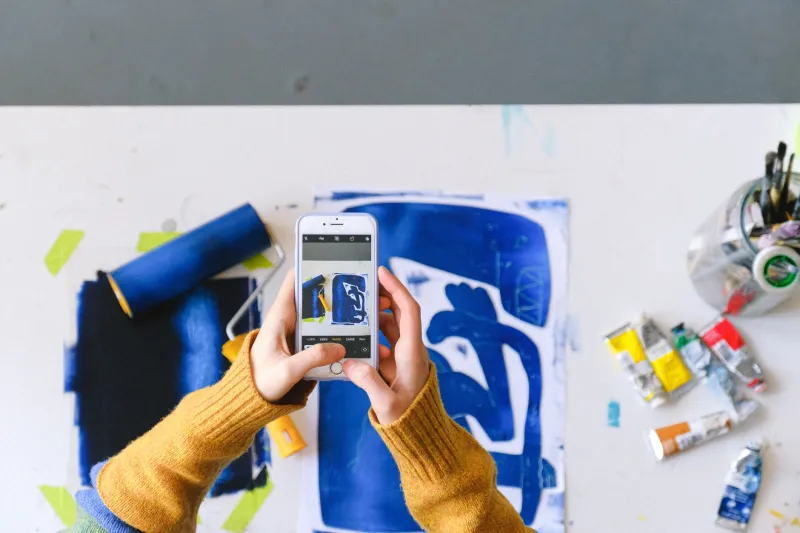
Painters are dragging brushes across rough concrete to split the bristles, creating strokes that look like they were made by wind or water rather than human hands. Textile artists are running fabric through the dryer with rocks, bleaching selectively, and cutting with dull scissors to get edges that breathe. Ceramicists are dropping pieces mid-firing, preserving the cracks, and calling the result finished.
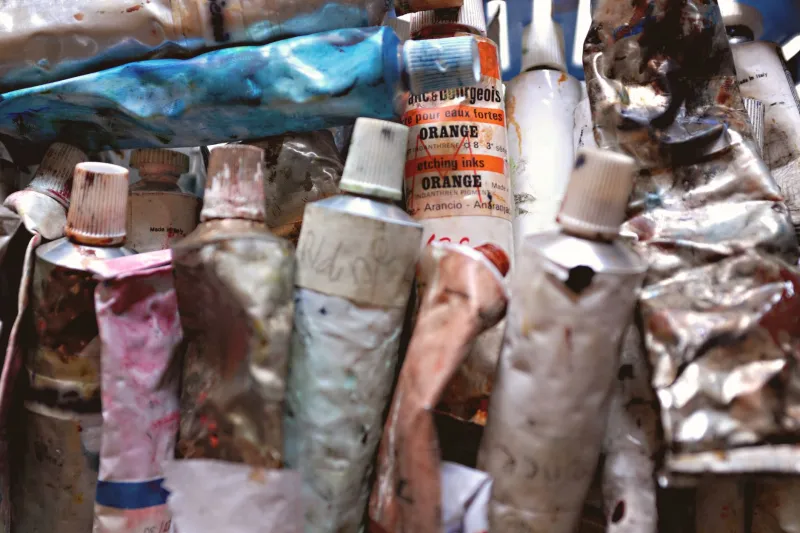
Skylar Tran, a mixed-media artist based in Los Angeles, keeps a dedicated drawer of what she calls her "destroyed tools" — brushes with no shape, palette knives with bent tips, rollers missing chunks of foam. "Every single one of those tools makes a mark that a new tool can't," she explains. "The bent palette knife? It drags paint in this uneven, almost violent way. That's not a flaw. That's a voice."
The Psychology of Productive Destruction
So what's actually happening in the brain when a creator chooses to break rather than fix?
Creative psychologists have long studied the concept of "desirable difficulty" — the idea that obstacles and friction in a creative process can lead to more original outcomes by forcing the brain out of autopilot. When your tool behaves unexpectedly, you can't rely on muscle memory or formula. You have to see what's happening and respond to it in real time.
There's also something deeply countercultural about this practice that resonates hard with the current creative climate. In an era of AI-generated perfection, algorithmic aesthetics, and content optimized within an inch of its life, choosing to work with broken, unpredictable tools is almost a political act. It's a declaration that human messiness has value. That the unplanned moment is worth chasing.
It's also, frankly, more fun. Ask anyone who's shot a roll of sabotaged film or run a session through a dying cassette deck — the uncertainty is electric.
How to Start Breaking Things (On Purpose)
If you're feeling the pull toward productive destruction, you don't need to trash your entire studio. Start small. Let a brush get a little too dry before cleaning it and see what it does to your next stroke. Duplicate an audio file and manually corrupt a small section using a hex editor (there are tutorials all over YouTube). Shoot a roll of film past its expiration date and leave it in your car for a week.
The goal isn't chaos for chaos's sake. It's about expanding your vocabulary — adding tools to your kit that perfect, pristine equipment simply cannot offer. The broken thing has something to say. Your job is to listen.
In a creative landscape drowning in polished, identical output, the makers who are willing to damage, destroy, and distort their tools are finding a voice that cuts through the noise. Turns out, the best upgrade you can make to your creative practice might be the one that costs you nothing — except the willingness to let something break.