Error 404: Perfection Not Found — Inside the Glitch Art Revolution Taking Over Digital Culture
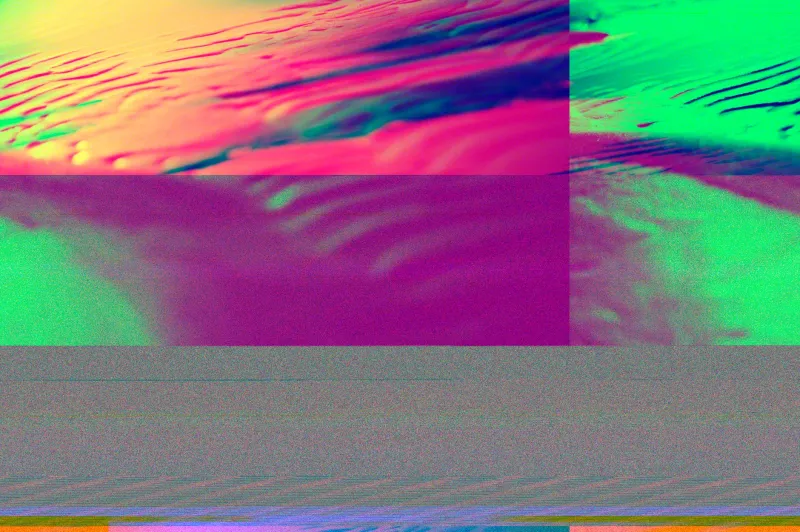
Your screen freezes. Colors bleed into each other in ways they shouldn't. Pixels fragment and stack in impossible configurations. For most people, that's a panic moment — reach for the restart button, call IT support, curse the machine.
For a rapidly growing community of digital artists, that's the whole point.
Glitch art — the intentional creation or simulation of digital errors, corrupted files, and system failures as a visual medium — has been lurking at the edges of internet culture for years. But right now, in 2024, it's having its loudest, weirdest, most commercially visible moment yet. And if you haven't been paying attention, you're about to get caught up fast.
What Even Is Glitch Art?
At its core, glitch art treats technological malfunction as a creative tool rather than a problem to fix. That can mean literally corrupting image or audio files by editing their raw data in a text editor (a technique called "databending"). It can mean exploiting software bugs intentionally, processing video through broken equipment, or using purpose-built apps to simulate the visual language of digital decay.
The results range from subtly unsettling — a portrait where the subject's face has been replaced by cascading horizontal scan lines — to full sensory overload, with images that look like they're actively dissolving into pure data.
The aesthetic pulls from a surprisingly wide range of visual references: the static of a dying VHS tape, the color bleeding of a poorly copied floppy disk, the pixel fragmentation of a video game cartridge that isn't quite seated right. If you grew up in the '80s or '90s, glitch art hits somewhere deep and strange in the nostalgia center of your brain.
From Niche to Mainstream: How Glitch Crossed Over
Glitch art has been a legitimate underground movement since at least the early 2000s, championed by digital artists and experimental musicians who were drawn to the idea that imperfection could be more expressive than polish. But the mainstream crossover has accelerated dramatically over the last few years.
Fashion was one of the first industries to catch on. Brands like Balenciaga and a wave of independent streetwear designers started incorporating glitch-inspired graphics — distorted text, fragmented imagery, corrupted color fields — into collections that sold out instantly. The visual language of broken technology turned out to be incredibly potent as a signifier of a certain kind of digital-native cool.
Then came the NFT boom. Whatever your feelings about the crypto art market, it created a massive commercial platform for digital artists who'd been working in glitch and generative aesthetics for years. Artists like Beeple — whose glitch-inflected digital collages became some of the most talked-about NFTs of the era — suddenly had a financial infrastructure that matched the cultural attention the work was already generating.
But the most interesting thing about glitch art's mainstream moment isn't the money or the fashion collabs. It's what the aesthetic is saying.
The Politics of the Beautiful Mistake
Glitch art isn't just visually interesting — it's philosophically loaded. We live in a culture that is deeply, almost pathologically obsessed with optimization. Smooth interfaces. Frictionless experiences. Algorithmic perfection. Every app, every platform, every piece of consumer technology is designed to make you feel like the machine is working flawlessly, like the seams are invisible.
Glitch art rips those seams wide open.
When an image corrupts and reveals the underlying data structure — the raw hexadecimal guts of a JPEG — it's a reminder that everything you see on a screen is a construction, a translation, a set of agreements between software and hardware that can break down at any moment. That's a pretty radical thing to put in front of people in 2024.
Chicago-based digital artist and designer Priya Nakamura has been working in glitch aesthetics for six years. Her large-format prints — corrupted portraits that look like they're being consumed by their own data — have been featured in galleries from LA to New York. "There's something deeply honest about a glitch," she explains. "It shows you the machine. It shows you the lie of seamlessness. I find that way more interesting than anything 'perfect' technology can produce."
That perspective resonates especially hard right now, when AI-generated imagery is flooding every corner of the internet with an uncanny, frictionless perfection that many people find deeply alienating. Glitch art is, in part, a response to that — a celebration of the weird, the broken, and the unmistakably made.
Your Glitch Art Starter Kit: Tools and Techniques
The beautiful thing about glitch art is that the barrier to entry is genuinely low. You don't need expensive software or professional training. You need curiosity, a willingness to break things, and a tolerance for happy accidents. Here's where to start.
Databending: Get Your Hands Dirty
Databending is the OG glitch technique — literally opening an image file in a text editor and messing with the raw data. Here's a basic approach:
- Take a JPEG or BMP image file and duplicate it (always work on copies).
- Open the copy in a plain text editor like Notepad (PC) or TextEdit (Mac — make sure it's in plain text mode).
- Scroll to somewhere in the middle of the file and delete, copy-paste, or add chunks of text.
- Save the file and reopen it as an image.
Some attempts will just break the file entirely. Others will produce something genuinely wild. The unpredictability is the whole game.
Apps and Software for Immediate Gratification
If you want results without the command line, several tools make glitch effects accessible and genuinely powerful:
- Glitché (iOS): A mobile app built specifically for glitch photography and video. Huge range of effects, easy to use, great for quick experimentation.
- ImageGlitcher (web-based, free): Upload an image and manipulate glitch intensity with sliders. Instant results, no download required.
- Audacity as an image processor: This sounds insane, but you can import image files as raw audio data in Audacity, apply audio effects, and re-export them as images. The results are genuinely unpredictable and often spectacular.
- Processing (free, open-source): For coders or the code-curious, Processing is a programming environment designed for visual artists. There are dozens of glitch-specific sketches and libraries available.
The Analog Glitch
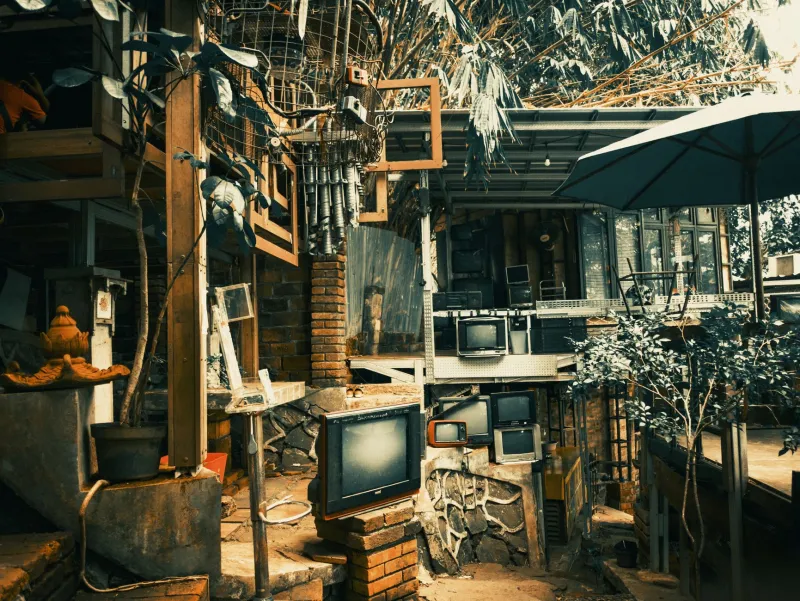
Not everything has to be digital. Filming a screen with your phone camera, running video through old VHS equipment, or photographing a monitor while it's refreshing can all produce organic glitch effects that have a texture no app can fully replicate. Thrift stores are gold mines for old video equipment that produces exactly the kind of signal degradation you're looking for.
Where to Share Your Work
The glitch art community online is active, supportive, and genuinely creative. Instagram and TikTok are obvious starting points — glitch aesthetics perform incredibly well on both platforms. For deeper community engagement, check out the r/glitch_art subreddit, which has been a hub for the movement for years. If you're interested in the NFT side of things, platforms like Foundation and Objkt have active communities of digital and glitch artists.
Most importantly: don't wait until your work feels "finished" or polished. Glitch art is, by definition, about embracing imperfection. Post the experiment. Share the mistake. Let the chaos speak.
The Error Is the Art
Here's the thing about glitch aesthetics that keeps it interesting long after the initial novelty wears off: it fundamentally reframes failure. In a culture where everything is supposed to work perfectly, all the time, the glitch insists on the value of the broken, the impermanent, and the unexpected.
That's not just an aesthetic position. It's a whole philosophy about creativity — one that Kreative Maniac has been riding since day one.
The best art has never come from playing it safe. It's come from pushing systems to their breaking point and finding out what's beautiful on the other side.
So go ahead. Break something. See what happens.