Dead Men's Walls: How Artists Are Raiding Estate Sales to Build Tomorrow's Masterpieces
Photo: Unknown authorUnknown author, CC0, via Wikimedia Commons
There's a painting sitting in a Goodwill bin somewhere right now. Maybe it's a seascape with muddy water and a questionable horizon line. Maybe it's a portrait of someone's grandmother, rendered in oils with obvious devotion and zero formal training. Maybe it's a paint-by-number sunset that someone actually finished, framed, and hung in their living room for thirty years before life moved on without it.
To most shoppers, it's a $4 eyesore. To a growing community of artists across the US, it's raw material — a launching pad, a collaborator, a mystery worth cracking open.
Welcome to the resurrection economy.
The Premise Is Simple. The Results Are Anything But.
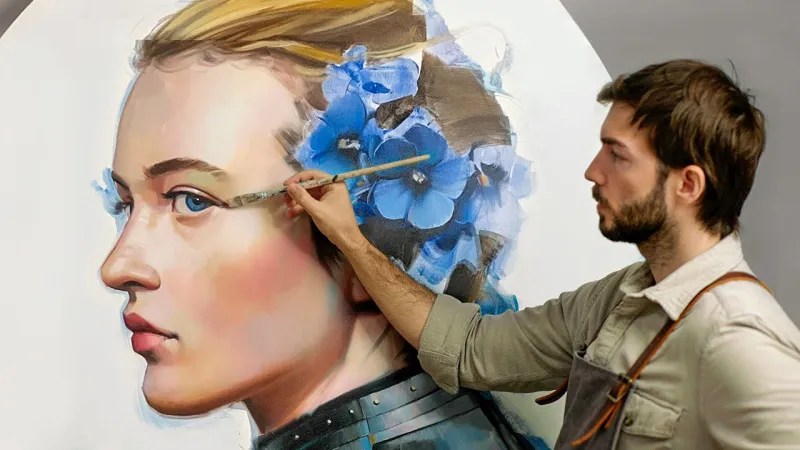
The practice goes by a few names — thrift store art remixing, found-art collage, painted-over painting, or just "overpainting" — but the core idea is consistent: source existing artwork from second-hand markets, then transform, deconstruct, or collage it into something new. The finished pieces carry the ghost of their origin. That's the whole point.
Artist and muralist Deja Rollins, based out of Baltimore, has built her entire studio practice around estate sale finds. She spends most Saturday mornings driving between sales listed on EstateSales.net, hunting for oil paintings, watercolors, and even old sketchbooks left behind by people she'll never meet.
"There's this intimacy to it that you can't manufacture," she says. "When I work into someone else's painting, I'm having a conversation with a stranger across time. That tension — their hand and my hand — is what makes the work feel alive."
Rollins typically sources between fifteen and thirty pieces per month, keeping what speaks to her and donating the rest back. Her studio walls are stacked floor to ceiling with what she calls her "waiting room" — pieces that haven't told her what they want to become yet.
Why Now? Why This?
The timing of this movement isn't accidental. As the cost of art supplies continues to climb and the pressure to produce original content at scale intensifies, artists are finding smarter ways to work. Found art is economical, yes — but that's almost beside the point for most practitioners.
What's really driving the trend is a collective rejection of the myth of pure originality. A generation raised on remix culture, hip-hop sampling, and fan fiction already understands intuitively that creativity is always in conversation with what came before. Overpainting and collage just make that conversation visible.
There's also a genuine ecological dimension. The sheer volume of discarded art in America is staggering. Estate sales happen every weekend in every city. Thrift stores like Goodwill and Salvation Army rotate through donated paintings constantly, and what doesn't sell often gets trashed. Artists who intercept that pipeline are, in a very real sense, keeping creative work alive.
"I think about the person who made the original piece," says Portland-based collagist Marcus Osei, who works exclusively with found materials. "They put time and care into something. My job is to honor that by giving it a second life that they couldn't have imagined."
The Ethical Conversation Nobody Wants to Skip
Of course, working with someone else's art raises questions worth sitting with. Who owns the creative lineage of a remixed piece? What do you owe the original maker — who is often anonymous, often deceased, and often an untrained everyday person rather than a professional artist?
Most artists in this space land in roughly the same place: transparency and intention matter. Rollins always notes in her artist statements that her work incorporates found paintings. Osei photographs his source materials before transformation and occasionally includes those images in his exhibition documentation.
"I'm not trying to erase anyone," Osei explains. "I'm trying to amplify. The original mark is still in there somewhere, even if you can't see it. It's part of the structure."
The legal side is generally clean — once you've purchased an object, you own it and can alter it freely under US law. The moral side is messier and more interesting, and that's exactly where a lot of the best creative tension lives.
What to Look For (And Where to Find It)
If this practice is calling your name, the good news is that the sourcing infrastructure is already built. Here's how artists like Rollins and Osei actually do it:
Estate Sales are the gold mine. Sites like EstateSales.net and EstateAuctions.com list upcoming sales by zip code. Arrive early on day one for the best selection. Look beyond the obvious — framed wall art is great, but also dig through boxes for unframed canvases, old sketchbooks, and portfolios tucked under furniture.
Thrift Stores are more hit-or-miss but endlessly accessible. Goodwill, Salvation Army, and local independent shops all rotate stock frequently. Go mid-week when new donations have been processed. The art section is usually tucked near the back — don't skip the frames, either, because a bad painting in a gorgeous vintage frame is still a win.
Flea Markets and Antique Malls often have dealers who've already done some curation, which means prices are higher but quality is more consistent. Great for sourcing vintage illustration prints, old maps, and botanical diagrams that work beautifully in collage.
Facebook Marketplace and Craigslist have become surprisingly rich hunting grounds. Search "old paintings," "vintage art," or "estate lot" in your area. Many people just want things gone and will sell boxes of mixed art materials for next to nothing.
What to grab: Oil paintings on canvas or board (they accept new paint beautifully), watercolors on paper (perfect for collage), old sketchbooks and journals, vintage illustration books, paint-by-numbers (iconic texture), botanical and scientific prints, and any work that has visible emotional history — the more lived-in, the better.
Building a Practice, Not Just a Pile
The artists who do this most effectively aren't just hoarding — they're curating with intention. Rollins keeps a tagging system in her studio: pieces get labeled by dominant color, emotional tone, and what she calls "conversation potential" — her gut sense of what a piece wants to say next.
Osei takes a different approach, working in themed series where every source piece shares a common thread — all landscapes, all portraits, all works that appear to have been made by children. The constraint forces creative decisions that pure accumulation never would.
Both agree on one thing: the sourcing is part of the practice. The hours spent at estate sales, the conversations with strangers about what a painting meant to their family, the act of choosing — all of it feeds the work in ways that ordering supplies online simply doesn't.
"You can't rush it," Rollins says, holding up a small oil portrait of a man in a brown suit, his expression unreadable. "This guy has been waiting in a box for thirty years. He can wait a little longer until I know what I want to say to him."
She sets him carefully against the studio wall, in the waiting room, with all the others.
Somewhere, he's still waiting. Somewhere, he's about to be reborn.