No Permission Needed: The Artist-Run Spaces Blowing Up the Exhibition Playbook
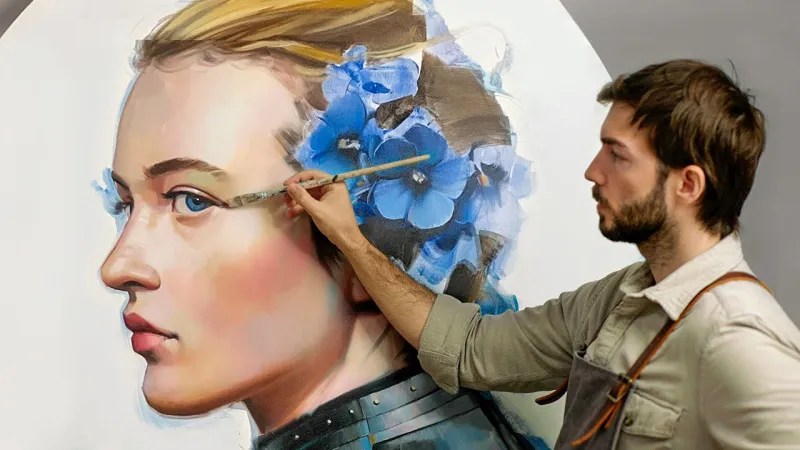
Photo: artist-run warehouse gallery exhibition DIY art space community, via revue-2-0-1.net
There's a particular kind of sting that comes with a form rejection from a gallery. You know the one—a three-sentence email that doesn't bother to include your name, arriving six months after you submitted slides of work you poured your entire soul into. For generations of artists, that sting was just part of the deal. You played the game, you waited, you hoped someone with institutional power would decide you were worth a wall.
A growing number of creators across the US have decided that deal is garbage—and they're building something better from scratch.
Warehouses, Basements, and the Beautiful In-Between
Walk through Detroit's Corktown neighborhood on a Saturday night and you might stumble into a gut-renovated auto shop where six painters, a ceramicist, and a textile artist have hung their work between exposed pipes and original grease stains. Head to a suburb of Atlanta and you'll find a collective operating out of a converted two-car garage with hand-painted signage and a mailing list that draws bigger crowds than some established galleries downtown.
These aren't accidental happenings. They're deliberate, organized, and increasingly sophisticated operations built by artists who grew tired of the gatekeeping mathematics that dominate the traditional art world—where a handful of dealers, curators, and collectors decide what gets visibility and what disappears.
Jamila Torres, who co-founded a rotating exhibition collective in a former textile warehouse in Providence, Rhode Island, puts it plainly: "The traditional gallery model was built for a very specific kind of artist—usually someone with connections, credentials, and the financial cushion to wait years for recognition. We needed something that worked for everyone else."
Her collective, which operates on a rotating membership model, has shown over 60 artists in two years. Zero of them went through a formal submission process. All of them were invited through community networks, word of mouth, and direct relationships.
The Pop-Up as Political Act
Pop-up exhibitions have existed forever, but what's happening now feels different. It's less about creating buzz and more about building infrastructure—permanent-ish alternatives to the permanent institutions that have historically controlled access.
In Los Angeles, collectives are claiming parking lots, empty storefronts in transitional neighborhoods, and even the occasional backyard for multi-night exhibition runs that feel more like block parties than openings. In Chicago, a group of muralists and printmakers launched a traveling show that moves through community centers, laundromats, and barbershops specifically to reach audiences who would never set foot in a River North gallery.
The underlying logic is radical in its simplicity: art should go where people already are, not demand that people travel to where art has decided to live.
Marcos Delgado, who organizes an annual warehouse exhibition series in Houston, describes the philosophy this way: "We're not trying to be an alternative to galleries. We're trying to make galleries irrelevant to our community. The work doesn't need their blessing to matter."
Collective Models That Actually Work
One of the most interesting structural shifts happening in these spaces is the move toward genuinely collective decision-making. Traditional galleries are hierarchical by design—a director or owner decides what shows, when, and at what price. Artist-run spaces are experimenting with everything from rotating curatorial roles to full consensus models where every exhibiting artist has equal say.
This isn't just idealism. It's producing shows with a curatorial coherence that surprises people who assume DIY means chaotic. When everyone with a stake in the exhibition has input on the hanging, the programming, and the experience, the result tends to be something that feels genuinely considered rather than assembled to please a collector base.
There are real challenges, of course. Funding is the obvious one. Many of these spaces operate on shoestring budgets cobbled together from artist contributions, small grants, community fundraisers, and the occasional merch sale. Insurance, permits, and the unglamorous logistics of running a physical space consume time that artists would rather spend making work.
But the collectives that are thriving have figured out how to divide that labor. Some have designated members who handle operations. Others rotate administrative responsibilities. A few have gotten creative with revenue—running workshops, hosting events, and partnering with local businesses to offset costs without compromising their independence.
Who Gets to Show, and Who Gets to Decide
The most quietly revolutionary thing about many of these spaces is their explicit commitment to showing artists who have been historically locked out of the traditional gallery system. That means artists of color, queer artists, disabled artists, artists without MFAs, artists who live in cities that aren't New York, LA, or Miami.
This isn't performative diversity programming. It's a structural correction. When the people running the space look like the artists being excluded, the curatorial decisions that follow look very different.
"We don't have a diversity initiative," says Torres. "We have a community. The work reflects the community. That's just what happens when you stop filtering everything through the same narrow taste-making apparatus."
The audiences these spaces attract reflect that shift. Younger visitors, families, people who describe themselves as not really being "art people"—they show up because the work is accessible in every sense of the word. The price of admission is usually nothing. The vibe is usually loud and alive rather than hushed and reverent.
The Future of Exhibition Is Already Here
None of this is entirely new. Artist-run spaces have existed in waves throughout American art history—the East Village scene of the 1980s, the DIY punk venues that doubled as art spaces, the zine fairs that became community institutions. What feels different now is the scale, the intentionality, and the explicit rejection of the idea that legitimacy flows downward from institutions.
The artists building these spaces aren't hoping to eventually graduate into traditional galleries. They're building something they actually want to exist—spaces that are accountable to their communities rather than to the market, that treat exhibition as a collective act rather than a competitive one.
For anyone still sitting on a body of work, waiting for someone to grant permission to show it: the permission structure you're waiting for is the problem. The warehouse is available. The garage is available. The parking lot is available.
The wall is yours.