Clash and Create: Why Your Biggest Artistic Rival Might Be Your Greatest Collaborator
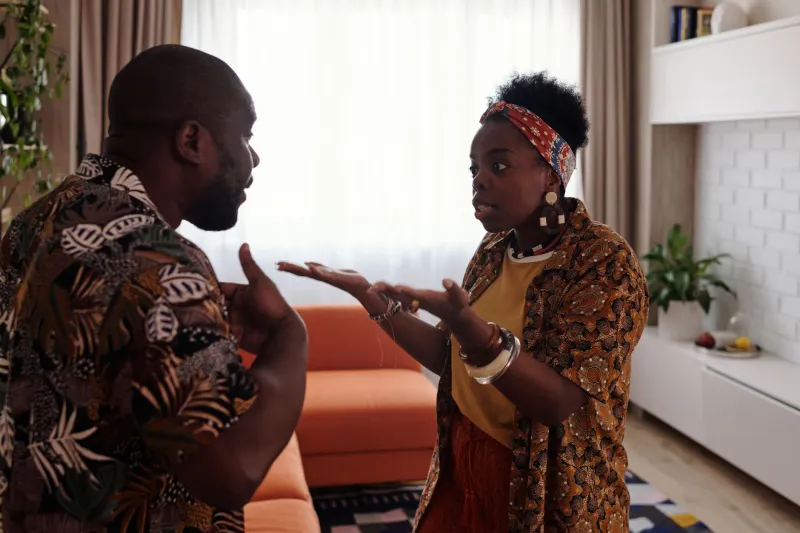
There's a particular kind of discomfort that lives in the room when two artists with completely opposing aesthetics sit down to make something together. The minimalist who flinches at every extra brushstroke. The maximalist who thinks negative space is just laziness in disguise. The street artist who thinks gallery culture is a joke, sharing a studio with a fine art painter who's never touched a spray can in their life.
And yet — here's the thing nobody talks about — that friction? That grinding, eye-twitching, "why are you doing it like that" tension? It's producing some of the most interesting work happening in American studios right now.
This isn't about being friends. This is about being useful to each other in the most combative, generative way possible.
The Comfort Zone Is a Creativity Killer
When you collaborate with someone whose sensibility mirrors your own, you get a smoother process and a safer result. You finish each other's sentences. You agree on color palettes before lunch. You ship something clean and competent and completely forgettable.
But when you partner with someone who fundamentally disagrees with your entire visual language? Every decision becomes a negotiation. Every choice has to be defended. And in defending your instincts out loud — to someone who genuinely doesn't share them — you start to understand those instincts in a way that years of solo work never forced you to.
Mia Cortez, a Chicago-based textile artist known for her dense, layered fiber work, spent the better part of a decade avoiding collaborations with anyone who didn't already appreciate complexity. Then a mutual friend connected her with graphic designer Theo Park, whose entire brand identity was built around brutal simplicity and ruthless negative space.
"I thought it was going to be a disaster," Mia admits. "Theo kept stripping things away. I kept adding. We were basically undoing each other's work for the first two weeks."
The piece they eventually produced — a large-scale installation that combined Park's typographic restraint with Cortez's tactile density — sold to a collector before the show even opened. More importantly, both artists say the collaboration permanently shifted how they approach their own solo practice.
The Rules of Productive Antagonism
Not every clash is useful. Two people who simply don't like each other personally will produce drama, not art. The distinction that matters is aesthetic incompatibility — a genuine difference in visual philosophy — paired with mutual respect for the other person's craft, even if you can't stand what they do with it.
That's the paradox. You have to respect the skill while rejecting the direction. You have to believe your collaborator is genuinely good at something you think is wrong.
Portland-based illustrator Darius Webb describes it as "arguing with someone who's better at being wrong than you are at being right." His two-year collaborative project with abstract painter Renata Solis — a series of prints that mashed Webb's precise, narrative linework against Solis's chaotic expressionist color fields — was born out of a Twitter argument that somehow turned into a studio visit that somehow turned into a body of work.
"We disagreed about literally everything," Webb says. "What art is for. Who it's for. What makes something finished. What makes something good. But we kept showing up because something was happening that neither of us could make happen alone."
That "something" is the key. The creative friction generates a third aesthetic — one that belongs to neither artist individually but could only exist because of the specific tension between them.
When Incompatibility Becomes the Medium
Some collaborators have gone even further, making the conflict itself the subject of the work. Brooklyn duo Priya Rao and Sam Delacroix — a digital collage artist and a traditional oil painter respectively — have built an entire exhibition series around their documented disagreements. Their process is public: they record their arguments, display their rejected drafts alongside the final work, and let audiences see exactly where each artist pushed back.
"People think collaboration is about harmony," Priya says. "But the most honest collaborations are full of friction. We just decided to stop pretending otherwise."
Their shows have drawn audiences who aren't just interested in the finished pieces — they're fascinated by the process archaeology. Seeing a discarded sketch with Delacroix's handwritten note "this is too cold" next to Rao's response "cold IS the point" tells a story about making art that no artist statement ever could.
This kind of radical transparency is very much in line with where studio culture is heading — away from the polished mythology of the lone genius and toward something messier, more collaborative, and a lot more honest about how creative decisions actually get made.
Finding Your Creative Nemesis
So how do you actually locate the right wrong person to work with? A few markers worth looking for:
They make work that genuinely irritates you — not because it's bad, but because it's doing something you fundamentally disagree with. If you can articulate why it bothers you, that's a good sign. Vague dislike isn't useful. Principled disagreement is.
They're serious about their craft — your creative nemesis needs to be as committed to their vision as you are to yours. A half-invested collaborator just creates noise. You need someone who will push back with the same intensity you bring.
There's something in their work you secretly envy — this one's harder to admit, but it's usually there. The minimalist who's annoyed by the maximalist often wishes they could commit that hard to abundance. The chaos merchant often envies the control. That secret envy is the creative hunger that makes the collaboration worth having.
You can disagree without it getting personal — this is the hardest one to assess in advance, and sometimes you only find out mid-project. But if you can fight about a color choice and still grab coffee afterward, you've probably got something workable.
The Aftermath Is the Real Prize
Here's what most people don't expect: the collaboration itself might not even be the most valuable thing. What you bring back to your solo practice afterward — the new questions you're asking, the assumptions you can no longer make unconsciously, the moves you now have to choose rather than default to — that's where the real transformation lives.
Mia Cortez says she can't look at her fiber work the same way since working with Theo Park. "I still love complexity. But now I know why I love it. And knowing why changes everything about how I use it."
That's the collaboration paradox in its truest form: you go in trying to make something with someone who's wrong about everything, and you come out knowing more about yourself than you did before.
So yeah — find your nemesis. Schedule the studio visit. Brace for impact. And then make something neither of you could have made alone.
